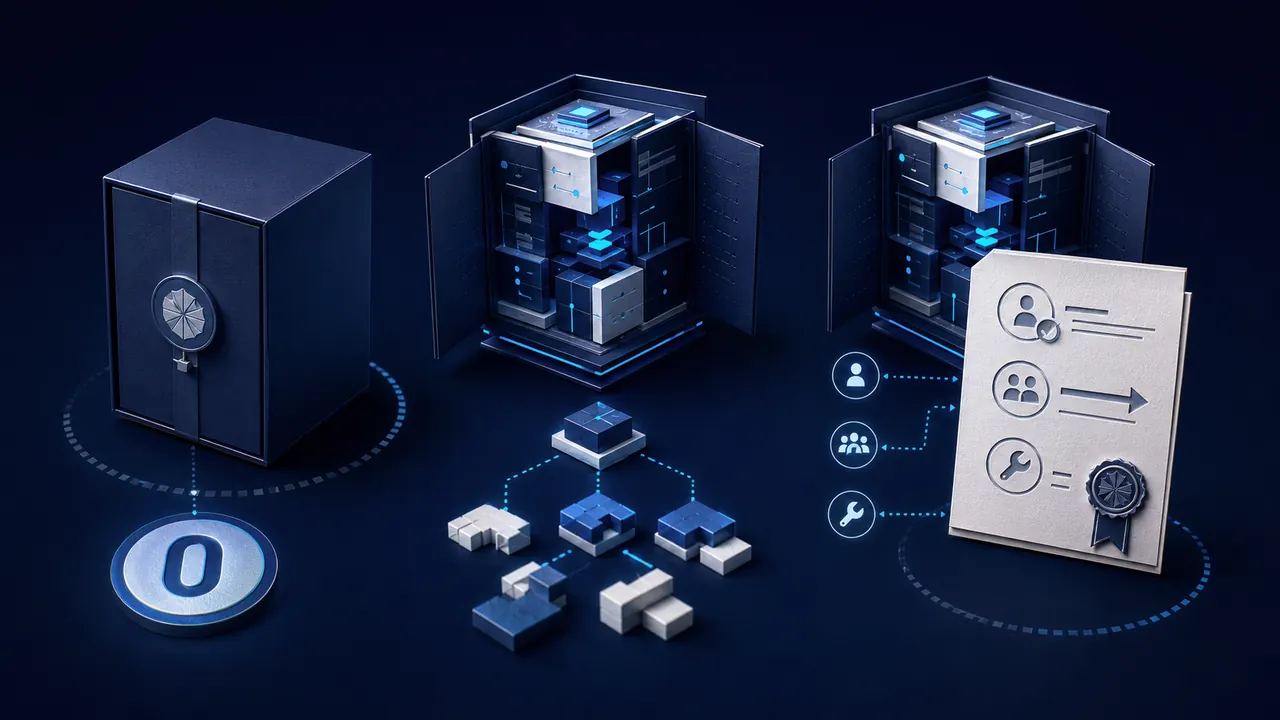
Freeware means you can obtain or use a program without paying, while free software and open source describe legal freedoms to use, inspect, modify and share code. A zero-dollar download can remain fully proprietary. A genuinely open-source program can be sold. The deciding document is the license, not the price button or a public code repository.
Freeware is a price category
A proprietary developer may let individuals use an app at no cost while prohibiting modification, redistribution, commercial use or reverse engineering. The company can change the price, add limits or stop distributing it under the terms of its agreement. Freemium software is similar: a basic tier is free while features, storage or support cost money.
No-cost does not mean no business model. The provider may sell subscriptions, advertising, support, cloud capacity or aggregated services. Review privacy and account requirements separately from price.
Free software refers to freedom
The Free Software Foundation defines free software through four essential freedoms: to run the program for any purpose, study and change it, redistribute copies, and distribute modified versions. Access to source code is necessary for studying and modifying it. In this usage, free means freedom rather than zero price.
Some free-software licenses use copyleft, requiring redistributed modified versions to preserve specified freedoms and source availability. Others are permissive. A project can charge for copies, hosting, support or development and still meet the definition.
Open source has a formal definition
The Open Source Initiative's definition requires more than viewable source. An approved license must allow free redistribution, source code, derived works and use without discrimination against people, groups or fields of endeavor, among other criteria. OSI maintains a list of approved licenses.
Open source and free software overlap substantially in the programs they cover, though the movements emphasize different values. For a normal user deciding what can legally be done, inspect the specific license rather than assuming the labels are interchangeable in every dispute.
Source available is not necessarily open source
A company may publish source code but restrict commercial use, competition, user counts or certain purposes. That transparency can still be useful for inspection or learning, but the restrictions may fail the Open Source Definition. Calling every visible repository open source hides a meaningful legal distinction.
Likewise, a repository with no license does not grant the public broad permission to copy, modify or distribute the code. Copyright applies by default. GitHub's licensing guidance notes that without a license, default copyright law generally leaves others without permission to reproduce, distribute or create derivative works.
What to check before adopting a tool
- Find the license file and exact version.
- Confirm whether the license is OSI-approved if open-source status matters.
- Check obligations for redistribution, attribution, source disclosure and notices.
- Review trademark, data and hosted-service terms separately.
- Evaluate maintenance, security response, export options and community health.
A permissive license may simplify reuse but does not promise active maintenance. A copyleft license can protect downstream freedoms but may create obligations when distributing a combined work. A free hosted service can still lock your data into a proprietary platform. These are different questions.
The useful translation
- Freeware: costs zero under stated conditions.
- Free software: grants the FSF's user freedoms.
- Open source: uses a license meeting the Open Source Definition.
- Source available: code can be seen, with whatever narrower rights the license grants.
- Public domain: generally not restricted by copyright, though the legal path and jurisdiction matter.
The label on a landing page is a clue. The license is the evidence.
Sources & methodology3 sources - evidence for this revision
The records below show what each source supports in this published revision.
- What is Free Software?GNU Project / Free Software Foundationreference - Retrieved Jul 12, 2026
What it supportsThe Free Software Foundation defines free software by four essential freedoms rather than price.
- The Open Source DefinitionOpen Source Initiativereference - Retrieved Jul 12, 2026
What it supportsThe Open Source Definition includes ten criteria and OSI maintains approved licenses.
- Licensing a repositoryGitHub Docsreference - Retrieved Jul 12, 2026
What it supportsPublicly available source without a license does not automatically grant permission to modify or redistribute it.