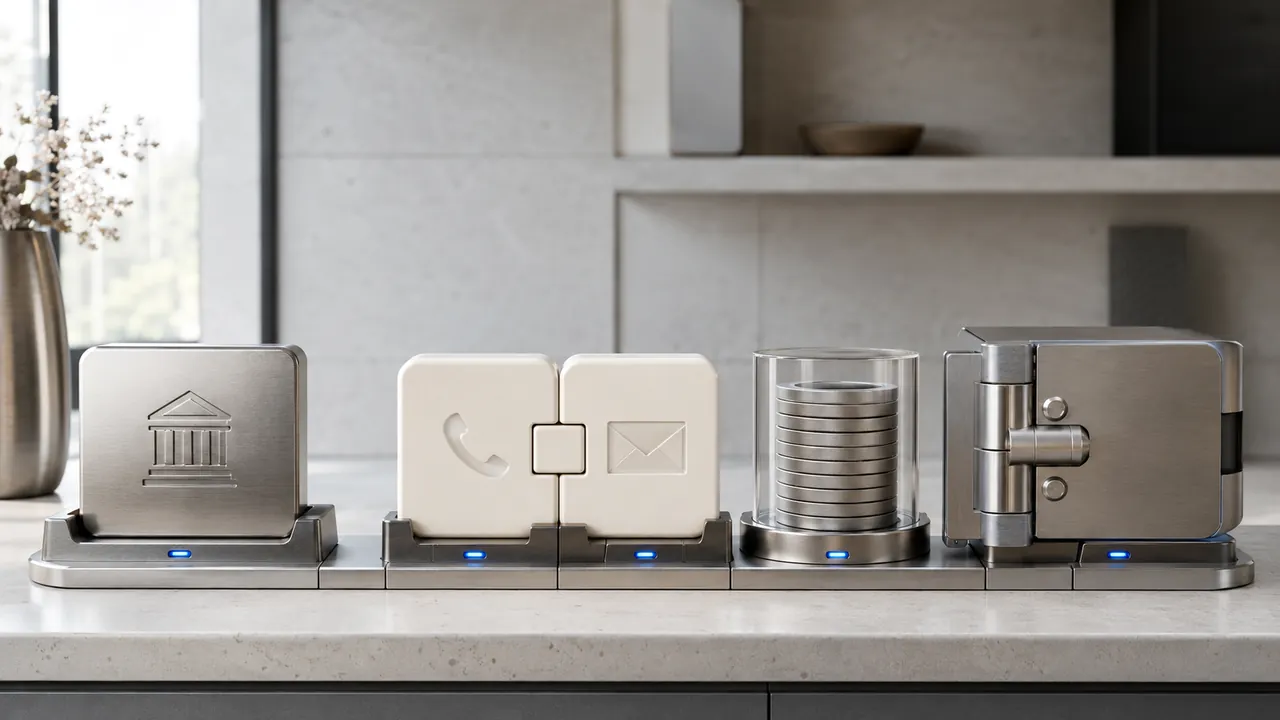
A bank transfer confirmation screen is the last cheap place to catch a mistake. Once money leaves—especially by wire or instant payment—the recovery options can narrow quickly.
Match the recipient, destination, amount, timing, and purpose—then save the confirmation until settlement. Read the destination, recipient, amount, fee, speed, and purpose aloud or line by line. For changed payment instructions, verify them outside the email or message that announced the change.
Obtain recipient details from an established record and know the transfer purpose. A rushed voice call or freshly changed invoice should never be the only source.
The confirmation screen is the checkpoint
Confirm recipient details through a channel you initiated. Verify the recipient through a channel you initiated, especially when bank details changed by email. Compromised invoices often preserve every detail except the destination.
Verify changed instructions out of band
Read the last digits and displayed recipient name
Read the displayed name and final account digits rather than relying on a saved nickname. Old recipients can change banks or lose control of an email address.
Check whether the transfer is instant, ACH, wire, or internal
Identify whether the transfer is internal, ACH, wire, or instant. Speed, fees, cancellation, and error-resolution options differ.
Review fees, delivery estimate, and cancellation language
Review amount, delivery date, fee, and any “cannot cancel” warning before approval. Do not let a countdown or caller rush this screen.
Save the confirmation and monitor both accounts
Save the confirmation until both sides show settlement. For fraud or a wrong destination, call the bank immediately; time matters more than composing a perfect explanation.
Business-email compromise often changes only the routing instructions on an otherwise believable invoice. Verify any new destination with a known person, using a phone number from prior records rather than the changed message.
Know whether this is ACH, wire, or instant
- Never move money to a “safe account” named by a caller.
- A wire and an ACH transfer have different recovery paths.
- Do not assume a saved recipient is still controlled by the same person.
Call the bank’s fraud number immediately for an unauthorized, misdirected, or scam-induced transfer and preserve the confirmation, messages, and recipient details.
Save the record until settlement
Check current menu names, limits, and recovery language against “Electronic Fund Transfers FAQs” and “Scammers and Your Money: What To Do When Asked To Pay” before acting; platform behavior can change after publication, and each source should be used only for the claim it actually supports.
CFPB’s electronic-fund-transfer guidance explains consumer protections and error-resolution duties for covered electronic transfers.
The FTC warns that payment-app transfers can be difficult to recover and recommends confirming the recipient before sending.
Sources & methodology2 sources - evidence for this revision
The records below show what each source supports in this published revision.
- Electronic Fund Transfers FAQsConsumer Financial Protection Bureaureference - Retrieved Jul 12, 2026
What it supportsCFPB’s electronic-fund-transfer guidance explains consumer protections and error-resolution duties for covered electronic transfers.
- Mobile Payment Apps: How To Avoid a Scam When You Use OneFederal Trade Commissionreference - Retrieved Jul 12, 2026
What it supportsThe FTC warns that payment-app transfers can be difficult to recover and recommends confirming the recipient before sending.