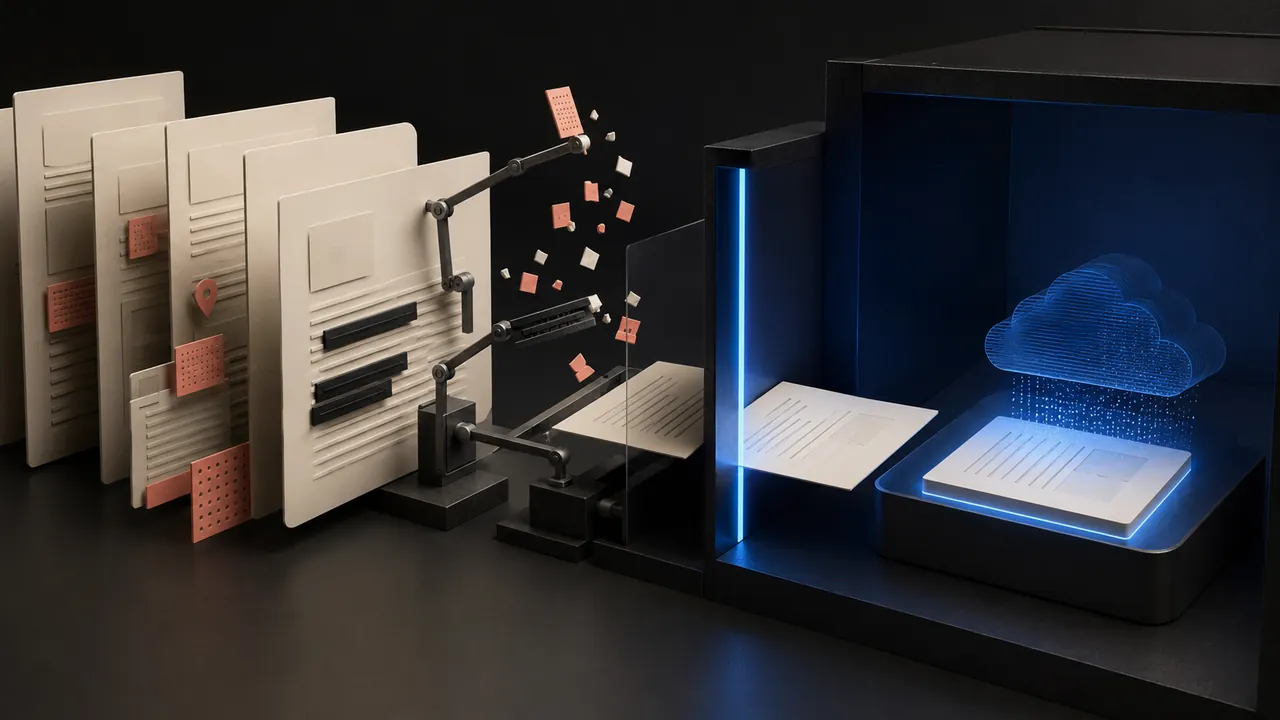
Treat an AI upload as transferring a copy of the file to another system. Verify the workspace, remove data the task does not need, understand retention and decide how the source and result will be deleted.
Inspect more than visible pages
Documents can contain comments, revision history, hidden sheets, speaker notes, images and metadata. Export a task-specific copy. A black rectangle layered over live text is not reliable redaction.
OpenAI says files in a chat follow that chat's retention, while custom-GPT knowledge persists until the GPT is deleted. Consumer and business offerings can have different training rules.
Before upload
- Confirm the workspace.
- Remove identifiers and irrelevant pages.
- Check collaborator access.
- Read retention and deletion rules.
- Keep an unchanged original elsewhere.
Afterward
Review outputs before downloading. Delete the chat or project when no longer needed and note any delayed deletion window. Closing a browser tab is not deletion.
High-consequence files
Do not upload regulated, client-confidential, legal, medical, financial or credential-bearing material to a consumer account without authority and suitable terms. A smaller extract often gives enough context with far less exposure.
File analysis can save time without erasing chain of custody. Minimize, verify, process and clean up.
Check whether the model can see the whole document
Some tools extract text but omit scans, diagrams or embedded images. Others use optical character recognition that can misread columns, handwriting and faint text. Ask the tool to list page count, headings and inaccessible elements before relying on its analysis. Compare a few quoted passages with the original to confirm extraction quality.
Match retention to the task
A one-time comparison rarely needs an indefinite project or reusable knowledge base. Upload into the shortest-lived supported context, avoid attaching the file to a public custom assistant, and name the working copy so it cannot be mistaken for the authoritative record.
Example: a spreadsheet review
Instead of sending a customer workbook, create a copy containing only the relevant columns, replace direct identifiers with stable pseudonyms and remove hidden tabs. After analysis, verify totals against the original locally. This preserves the relationships the task needs without disclosing unrelated rows.
Keep output classification aligned
An AI-generated summary of a confidential file can remain confidential even when it omits the original names. Store and share the output under the same policy until someone verifies that sensitive facts cannot be reconstructed. If the service creates downloadable charts, code or transformed files, include those artifacts in the deletion and access review rather than focusing only on the chat transcript.
Sources & methodology2 sources - evidence for this revision
The records below show what each source supports in this published revision.
- File Uploads FAQOpenAI Help Centerreference - Retrieved Jul 12, 2026
What it supportsChatGPT file retention depends on upload location and chat or GPT lifecycle.
- NIST Privacy FrameworkNISTreference - Retrieved Jul 12, 2026
What it supportsNIST provides a privacy risk-management framework.